


THANK YOU FOR SUBSCRIBING
Weekly Brief
Be first to read the latest tech news, Industry Leader's Insights, and CIO interviews of medium and large enterprises exclusively from Healthcare Tech Outlook
A featured contribution from Leadership Perspectives: a curated forum reserved for leaders nominated by our subscribers and vetted by our Healthcare Tech Outlook Advisory Board.

University Hospitals
The Evolution of Virtual Cardiology Care with VP Exam
James Cireddu
Advances in virtual care technology offers exciting opportunities for complex chronic care management. Heart failure (HF) morbidity and mortality effects over 5.7 million Americanspredicted to exceed$70 billion cost by 2030. Traditional telemedicine platforms have obstacles including lack of comprehensive physical exam data, affordability of equipment, and difficult to use technology requiring extensive training. Guideline-directed drugs with clear benefits are often underused due to safety and monitoring concerns.Cardio-pulmonary diseases rely on physical examination for early detection of clinical decompensation whileimproving clinical confidence in management.
VPExam is a HIPAA compliant medical device data system that overcomesbarriers to traditional telemedicinewith a combination of augmented reality (AR) based guidance leading a minimally trained nurses or medical assistants through appropriate camera positioning for video capture based upon anatomical landmarks includingevaluation of jugular venous distention and degree of lower extremity edema in a reproducible manner.VPExam integration with Bluetooth enabled stethoscopes such as Eko Duo with single lead ECGalso captures full heart and lung exams. Virtual physical examination components are customizable by providers andmedical specialty. VPExam allows nurses to transmit structured data including vitals, voice recognition history and review of systems, medication reconciliation with photographs of pill bottles, and a document scanning. 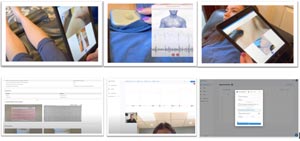
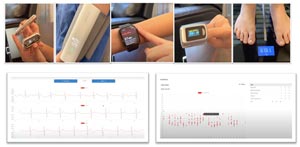
VPExam offers Remote Patient Monitoring (RPM) utilizing Apple Health and Google Fit Health Kit data transmission to the VPExam Provider Portal including blood glucose, body mass index, cardio fitness, blood pressure, electrocardiogram, heart rate, oxygen saturation, walking heart rate, and weight. VPExam RPM transmits alerts such as tachycardiafrom a smart watch revealing a patient going into atrial fibrillation or greater than three-pound weight gain from a Bluetooth scale revealing a patient suffering from decompensation of heart failure triggering deployment of personnel to perform VPExam in patients’ home or facility.
Shah et al published the “VPExam Virtual Care for Heart Failure Optimizing Transitions of Care Quality Improvement Project (VPExam QI)” in the Cardiovascular Digital Health Journal, Vol 3, No 3, June 2022evaluating the technology in heart failure management post discharge. Nursing satisfaction was high at 4.8/5with 0% technical errors with deployment on over 550 Home Care devices across University Hospitals of Cleveland.19% of study encounters occurred with Home Care services and 81% of encounters occurred at Skilled Nursing Facilities. During the 6-month pilot, 84% of patient encounters required moderate significance changes in clinical modification based upon VPExam follow-up. The most common changes involved diuretic adjustments in 44% of encounters and vasoactive medication adjustments in 44% of encounters. Moderate significance modification encounters were impacted by volume status assessment (47.6%), cardiopulmonary auscultation (33.3%), and ECG detection of arrythmias/ atrial fibrillation (14.2%).
 The historic control heart failure population discharged for the year prior to the pilot had an average monthly readmission rate of 15.91% that dropped to 7.98%during the pilot for a 40.1% relative risk reduction.In the final four of six months ofVPExam QI, readmission rates fell precipitously to 0%. 30-day mortality in VPExam QI was significantly lower at 30 days at 4.54% with a relative risk reduction of 56.3 % compared to historical controls.
VPExam QI reveals potential for evolving Virtual Physical Examination (VPExam) technology. Local Virtual Care Networks can be created between hospital systems and partner SNFs and Home care that is feasible, scalable,and cost effective. Structured data transmission improves detection of uncontrolled hypertension, hypotensive episodes, tachyarrhythmias, and errors in medication reconciliation. Such significant reductions in 30-day hospitalization and mortality supports virtual care technology to optimize continuity and transitional quality of care.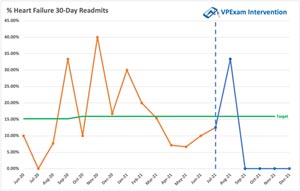
Transfer of skilled nursing facility (SNF) residents to emergency departments increase morbidity, mortality, as well as cost. The average readmission costs $15,200with over 233,100 readmissions for heart failure, 81,600 readmissions for cardiac arrythmias, and 74,300 readmissions following myocardial infarct annually. Additional high-risk conditions that benefit from VPExam cardiopulmonary and volume assesment include COPD with 106,300 readmissions, pneumonia with 7,500readmissions, and renal failure with 96,900 readmissions annually. Virtual care helps reduce the cost of ambulance transport and nursing timewhile reducing the risk of spreading infectious diseases such as COVID or influenza.
Virtual care offers earlier detection of clinical decompensation to underserved communities and better decisions by clinicians in order to avoid preventable penalties and unnecessary escalationsin care. The downstream effect ismore efficient utilization of our limited inpatient and ICU beds.Noninvasive virtual care platforms offer novel interventions to optimize quality of care while addressing the paradigm of growingresource scarcity.
The articles from these contributors are based on their personal expertise and viewpoints, and do not necessarily reflect the opinions of their employers or affiliated organizations.
